
AI-Enabled Sourcing for Smarter Procurement Decisions
Transform your sourcing process with AI-powered automation. Streamline RFQs, evaluate suppliers intelligently, collaborate seamlessly, and accelerate procurement from requisition to purchase order.
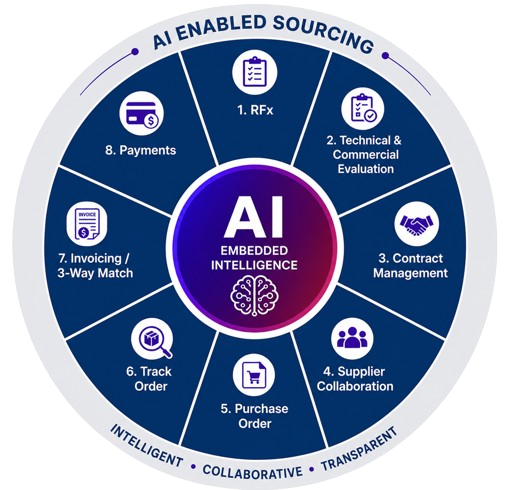
AI-Enabled Sourcing
Automate Your Source-to-Contract Process with AI
The Sourcing Module in SupplyChainHub (SCH) is a comprehensive digital procurement solution that automates the entire sourcing lifecycle—from identifying procurement needs to selecting the best supplier and creating a Purchase Order (PO). It replaces manual, email-based sourcing processes with a centralized, transparent, and intelligent platform that enables procurement teams to collaborate with suppliers, evaluate bids efficiently, and make data-driven purchasing decisions.
By integrating automation, configurable workflows, supplier collaboration, and AI-powered insights, SCH helps organizations to reduce procurement cycle times, optimize costs, ensure compliance, and improve supplier performance.
A robust sourcing hub transforms supplier management from an administrative back-office task into a strategic growth driver. It typically encompasses the following core components and functionalities.
Supplier Hub & Master Data Management
- Onboarding & Compliance: A centralized database where suppliers register, upload certifications, and submit ESG (Environmental, Social, and Governance) data.
- Performance Tracking: Provides 360-degree visibility into supplier capabilities, historical fill rates, quality control, and financial stability.
- Risk Management: Integrates external market and risk data to monitor geopolitical or environmental disruptions, allowing for dual or alternative sourcing strategies.
Sourcing Events (RFx & Auctions)
- Smart Requisitions: Translates internal purchase requests into standardized Request for Information (RFI), Request for Proposal (RFP), or Request for Quotation (RFQ) documents.
- eAuctions: Facilitates transparent, competitive bidding (such as reverse auctions) to drive down costs on individual items or raw materials.
- Bid Analysis: Uses automated evaluation scorecards and itemized bidding to compare vendor proposals objectively based on cost, lead times, and service-level agreements (SLAs).
Contract Lifecycle Management (CLM)
- Template Standardization: Allows for the creation, negotiation, and execution of legally binding contracts using approved clauses and standardized templates.
- Obligation Tracking: Monitors supplier commitments, KPIs, and impending renewal or renegotiation dates.
Upstream Collaboration & Strategy
- Category Management: Organizes company spend into strategic categories, helping teams build multi-year plans to consolidate spend and gain leverage.
- Collaborative Design: Involves integrating tier-1 and raw material suppliers early in the product design phase to optimize materials and eliminate the "bullwhip effect".
Key Benefits of AI enabled Sourcing
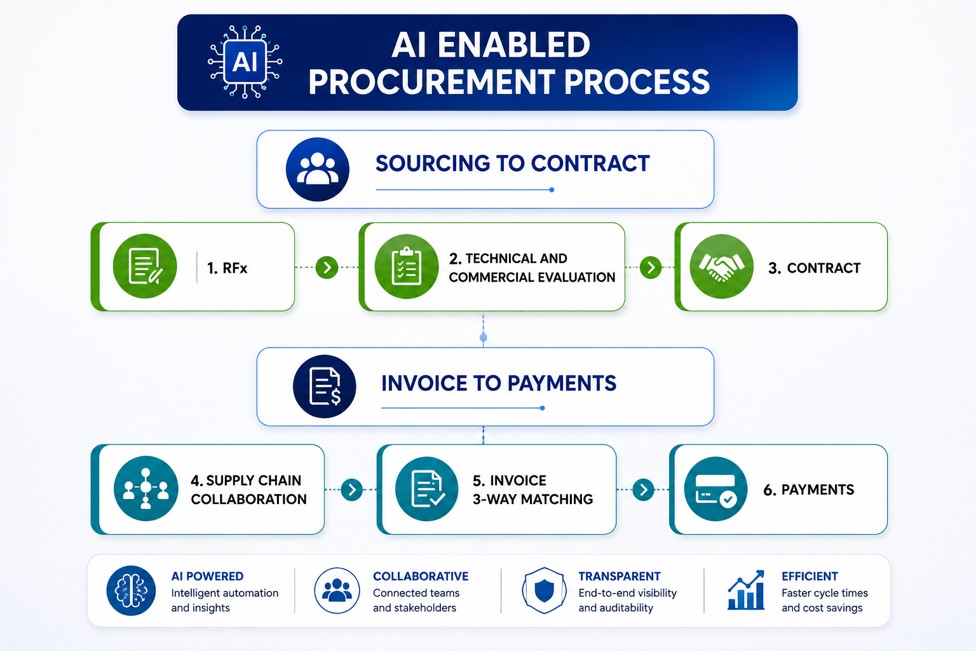
The AI Enabled Sourcing solution in SupplyChainHub (SCH) digitizes and automates the entire Source-to-Contract lifecycle. By embedding AI into every stage—from RFx creation and supplier evaluation to contract management, purchase orders, invoicing, payments, and supplier collaboration—organizations can make faster, data-driven procurement decisions while reducing costs, improving compliance, and strengthening supplier relationships.
- Cost Optimization: Consolidating company-wide spending data and optimizing vendor selection drives significant margin improvements.
- Risk Resilience: Allows organizations to quickly identify and switch to backup suppliers when disruptions occur.
- Operational Efficiency: Streamlines the upstream cycle—from initial need assessment to vendor award—reducing manual errors and rework
FAQ'S
1. What is the SupplyChainHub Sourcing Module?
The SupplyChainHub Sourcing Module is a digital procurement solution that automates the end-to-end sourcing process, from Purchase Requisition (PR) to supplier selection and Purchase Order (PO) creation. It enables organizations to conduct sourcing events efficiently while improving transparency, collaboration, and compliance.
2. How does the sourcing process work in SupplyChainHub?
The sourcing process follows these key steps:
PR → Approval → Supplier Identification → RFQ Creation → RFQ Publication → Supplier Quotation Submission → Technical Evaluation → Commercial Evaluation → Supplier Award → Purchase Order Creation.
3. What is an RFQ?
A Request for Quotation (RFQ) is a procurement document sent to suppliers requesting pricing, technical details, delivery schedules, and commercial terms for specific goods or services.
4. How are suppliers invited to participate?
Buyers can invite suppliers from the approved supplier database or category-based supplier lists. Suppliers receive automated notifications through the Supplier Portal and email.
5. Does SupplyChainHub support bid comparison?
Yes. SupplyChainHub provides an automated bid comparison matrix that allows procurement teams to compare supplier quotations side-by-side for faster and more informed decision-making.
6. Can negotiations be managed within the platform?
Yes. Buyers can conduct and document supplier negotiations regarding pricing, delivery schedules, payment terms, and contractual conditions, ensuring complete traceability.
7. How is the final supplier selected?
The supplier is selected based on configurable evaluation criteria such as technical compliance, commercial competitiveness, supplier performance, risk assessment, and Total Cost of Ownership (TCO).
8. Can Purchase Orders be generated automatically?
Yes. Once the supplier is awarded, SupplyChainHub can automatically generate a Purchase Order (PO) using the approved sourcing information, reducing manual effort and errors.
9. Does SupplyChainHub integrate with ERP systems?
Yes. The platform integrates seamlessly with ERP solutions such as SAP S/4HANA, SAP ECC, and Microsoft Dynamics, enabling smooth data synchronization and eliminating duplicate data entry.
10. Can organizations customize the sourcing workflow?
Yes. SupplyChainHub offers configurable workflows, approval hierarchies, evaluation criteria, RFQ templates, and business rules to align with each organization’s procurement policies.
Source-to-Contract (S2C) Process
Manage every stage of your sourcing journey—from RFx creation and supplier evaluation to contract management, purchase orders, invoicing, and payments—all within a single AI-powered procurement platform.
1. RFx Management
RFx - represents an organized procurement process that supports smarter decision-making. It facilitates structured communication, allowing organizations to collect information, compare bids, and evaluate comprehensive proposals to select the optimal supplier.
2. Technical & Commercial Evaluation
A techno-commercial evaluation is a two-step procurement assessment that reviews both the technical capabilities of a vendor’s proposal (e.g., solution architecture, compliance with project requirements) and its financial viability (e.g., pricing, payment terms, and life-cycle costs) to determine the best overall value. The process ensures businesses select suppliers that offer the ideal balance between quality and cost rather than defaulting strictly to the lowest bidder.
3. Contract Management
The lifecycle process of drafting, negotiating, executing, and monitoring agreements with suppliers. It bridges the gap between identifying a vendor and realizing long-term value, ensuring compliance, mitigating supply risks, and securing favourable cost terms.
4. Supplier Collaboration
The shift from traditional, transactional vendor management to strategic partnerships. It involves sharing real-time data, forecasts, and risks. It helps identify risks, supports risk mitigation, and ensures innovation, cost efficiency, and ESG compliance.
5. Purchase Order & Tracking
PO and Tracking - is a legally binding contract sent by a buyer to a supplier outlining exact items, quantities, prices, and delivery terms. PO tracking monitors this order through its entire lifecycle—from creation and vendor approval to shipping, receipt, and final invoice matching—ensuring timely delivery and budget control.
6. Invoice Management
It primarily serves as a financial safeguard by using three-way matching—comparing the supplier's invoice, the original purchase order (PO), and the goods receipt to ensure accuracy and prevent overpayment.
7. Payment Automation
Streamline accounts payable (AP) by auto-matching purchase orders, delivery receipts, and invoices, which allows companies to capture early payment discounts and optimize global working capital.